Official ball · Atlantic League of Professional Baseball

A century-old idea,
reborn in red & blue.

The Drake is the first baseball in over 100 years manufactured by a professional league itself. Three years of research. Laboratory, factory and game-day tested. Built to a single specification: the way the game is supposed to feel.

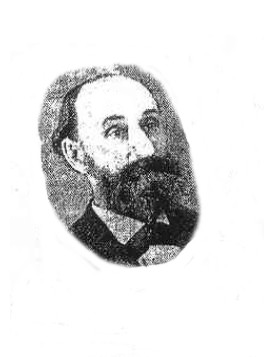
The son of a shoemaker, Ellis Drake was a schoolboy in the 1840s when he picked up scraps of leather from his father's bench and stitched them into a shape no one had tried before — two interlocking pieces, a figure eight.

The balls of his day were "lemon peel" — four panels closed up with an X of exterior stitching, the seams as ragged as a citrus rind. They came apart after a few innings. Drake's two-piece cover held. It became the way every baseball, everywhere, is made — and still is.

He never patented it. "In the days when the cover was new to me I neglected to have it patented," he wrote later, "so others reaped the benefit of my work." Within a generation, Harwood & Sons of Natick, Massachusetts had opened the first factory built to make the figure-eight ball, and Drake's design quietly rolled into the major leagues without his name on it.

The Atlantic League put it back. In 2022 the ALPB became the first professional league in over a century to manufacture its own baseball. They called it The Drake.

Anatomy

Two panels. 108 stitches. One spec.

The first professional baseball in over a century made by the league that plays with it. Three years of R&D. Re-tested every off-season.

The blue thread, back.

Until 1934, the American League laced its balls with red & blue; the National League used red & black. The leagues consolidated to all-red and never looked back. The Drake returns the second color — exactly as the AL stitched it a century ago.

A QR code that changes.

Every club gets its own dynamic QR code, stamped between the two signatures. Scan a foul ball in April for one offer; scan it in August for another. First league in any sport to put live, club-specific content on the cover of its game ball.

Two signatures, every ball.

ALPB President Rick White's signature appears on every Drake the league plays with. The host club's Director's signature joins it on the balls used at their park. The QR code sits between them, above the Official Atlantic League stamp.

Lab, factory, field.

Three years of laboratory work, factory iteration and game-day testing before The Drake ever crossed a plate. Every off-season it goes back to the lab to re-prove it still meets — and beats — every spec for a professional baseball.

Customize

Make it yours.

Every league deserves a ball of its own. Add your league mark to the cover, your name to the leather, and your colors to the seams—all on the same Drake baseball used by the Atlantic League.

Each ball is factory-printed with a single-color league mark and finished with the iconic Drake script, creating an official baseball that is unmistakably yours.

Drag to spin · scroll to zoom · click to place artwork, then drag it to move it

Print color

Everything printed on the leather — logos, text, the Drake script — uses this one ink.

Lace colors

First color
Second color

League marks

Your artwork

On the ball

    Prototype — designs aren’t saved or ordered yet.

    FAQ

    Good questions.

    Is The Drake really the same ball used in ALPB games?

    Yes. The Drake is the Atlantic League's official, on-field baseball. The balls you can buy here are produced to the same specification as the ones the players use — the only difference is the box.

    Why red and blue stitching?

    It's a nod to the American League balls of the early 20th century, when teams used two-color stitching. The ALPB brought it back in 2015 and made it part of The Drake's signature look in 2022.

    What's the QR code for?

    Starting in the 2025 season, every Drake carries a QR code unique to the host club. Scan it to see live team content, promotions, and ticketing — a first in professional baseball.

    Who was Ellis Drake?

    A shoemaker's son from 19th-century New England. As a schoolboy, he sewed two figure-eight leather panels into a baseball cover — a design that became the world standard and still wraps every ball played in the majors today.